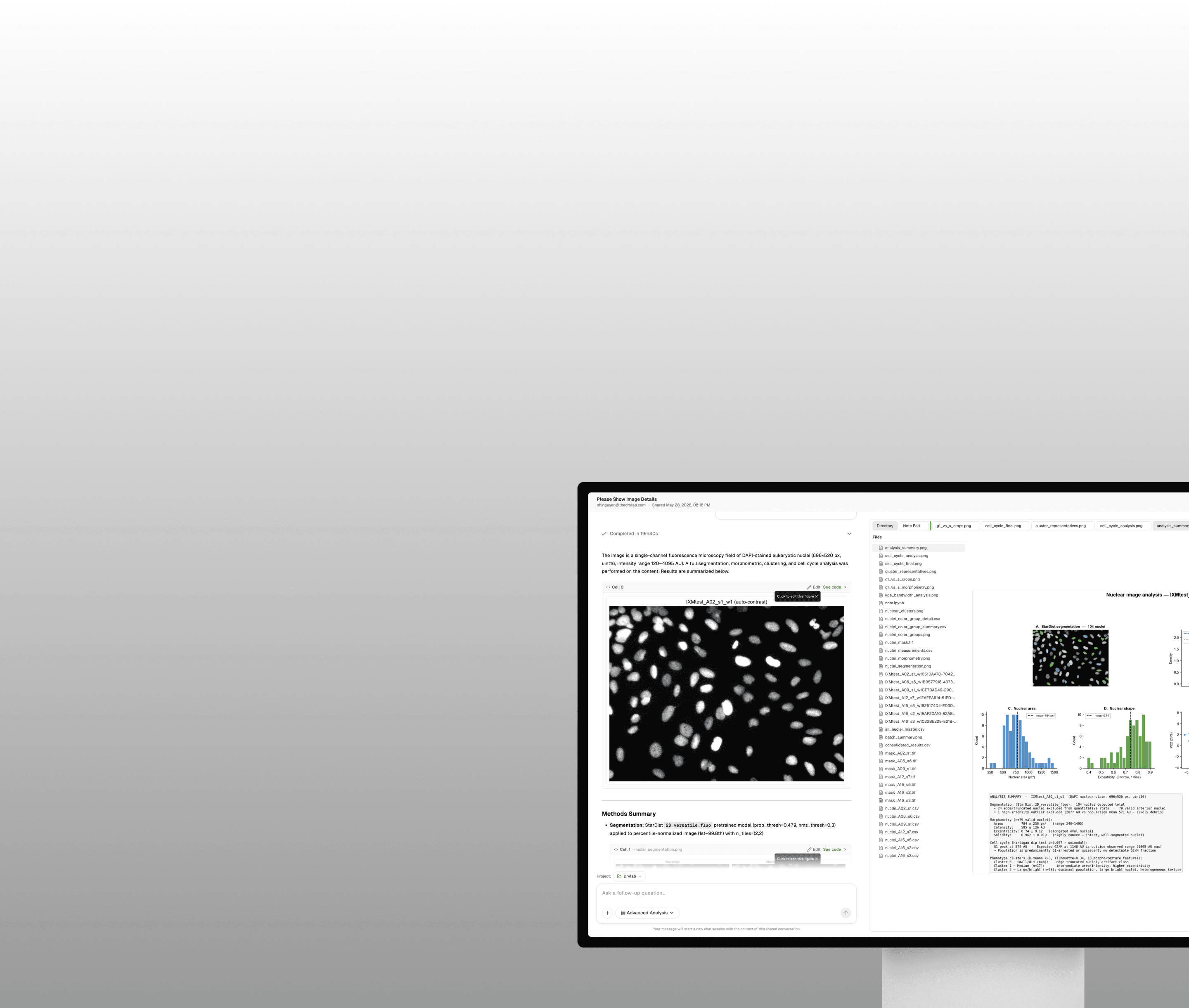

This use case was co-created by academic researchers and Drylab. The full chat conversation demonstrates how researchers interact with Drylab to perform analyses, ask questions, and adapt workflows as new insights emerge.
We hope these examples inspire new approaches and possibilities in your own research.
Summary
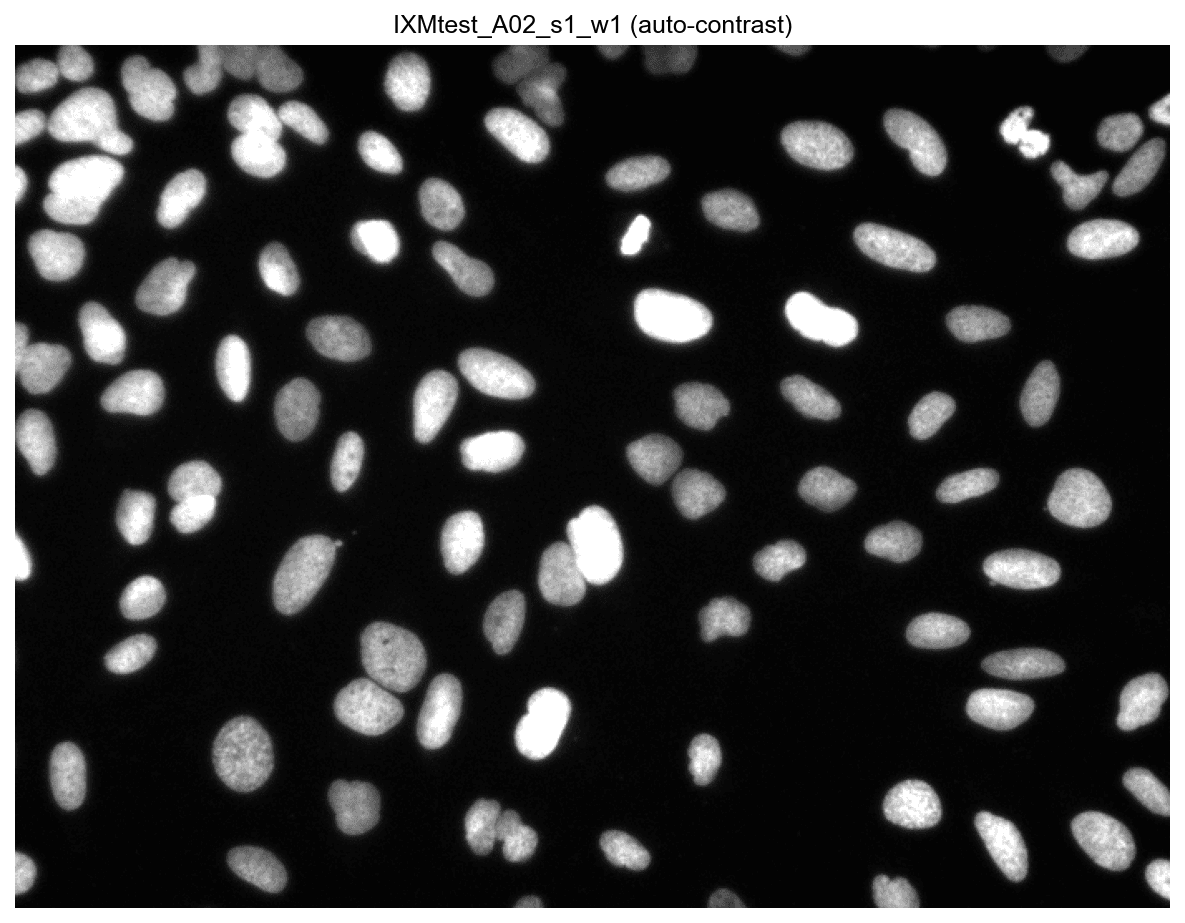
Analyze DAPI-stained microscopy images to identify individual nuclei, quantify nuclear morphology, and estimate cell cycle states based on DNA content and chromatin organization. The workflow combines automated nuclear segmentation with single-cell morphometric and texture analysis to characterize cell populations.
Input
DAPI-stained fluorescence microscopy images
Output
Nuclear segmentation masks
Cell count per image
Nuclear size and morphology measurements
Cell cycle phase classification (G1, S, G2/M)
Chromatin texture features
Population-level summary statistics and visualizations
Analysis breakdown
Segmentation & QC
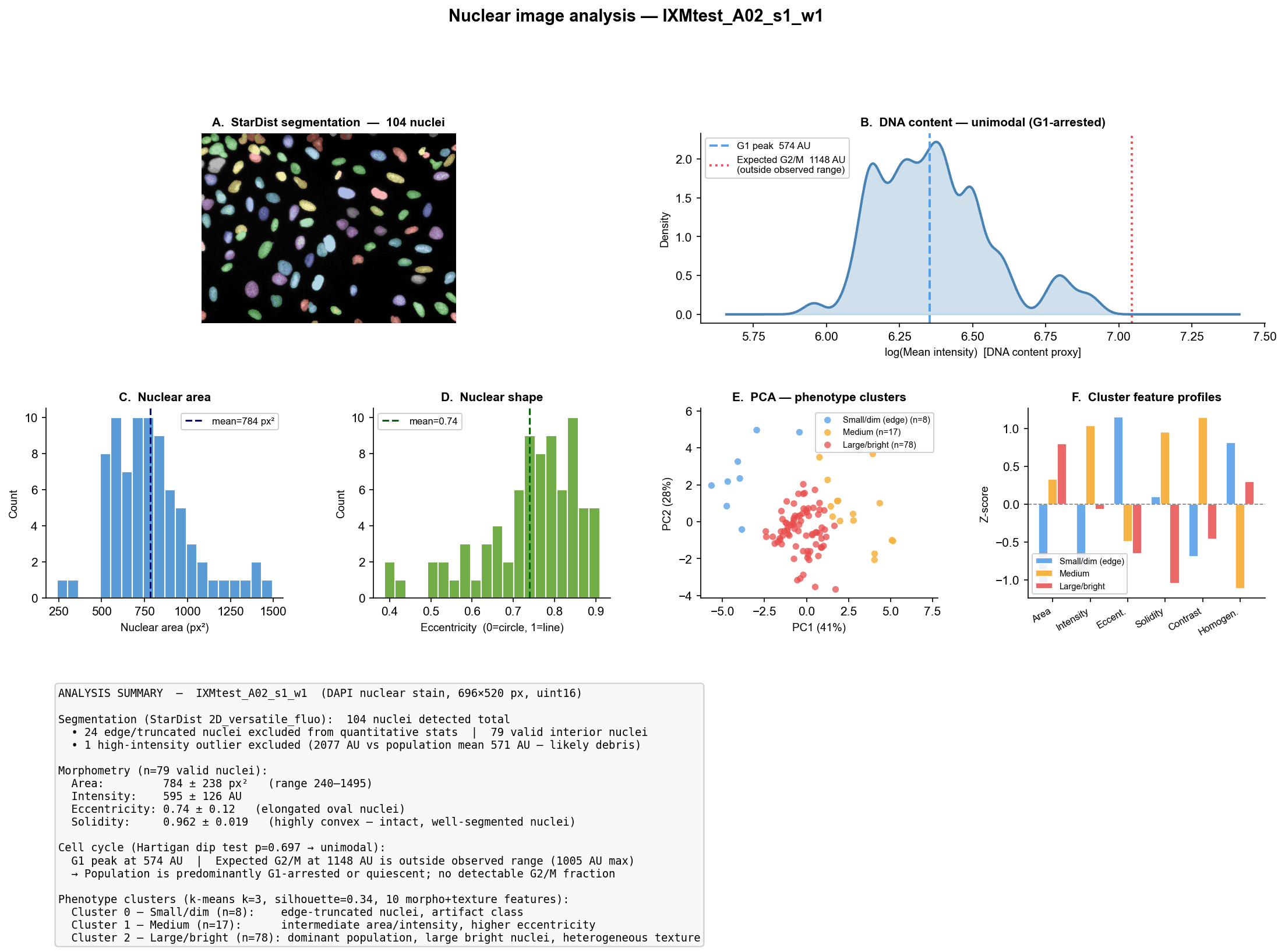
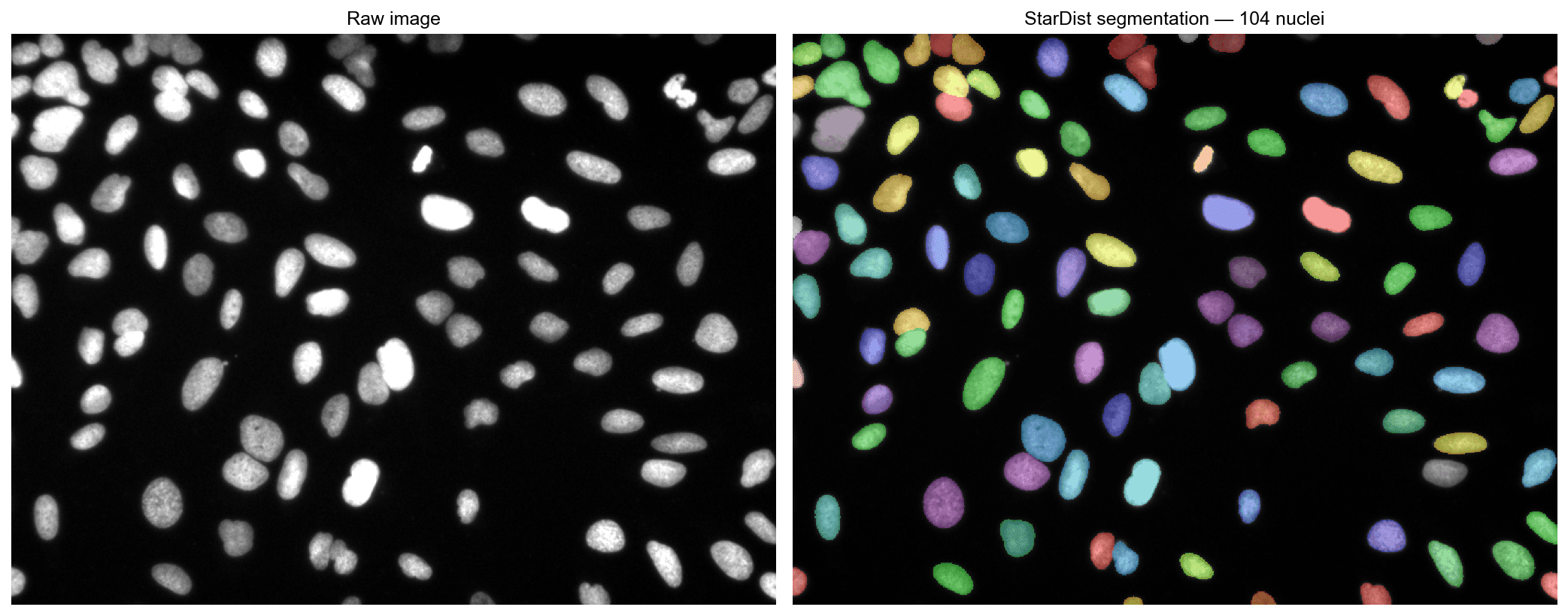
StarDist 2D_versatile_fluo pretrained model (prob_thresh=0.479, nms_thresh=0.3) applied to percentile-normalized image (1st–99.8th) with n_tiles=(2,2)
StarDist detected 104 nuclei total; 1 high-intensity outlier (2,077 AU vs population mean 571 AU — likely debris) excluded
24 nuclei flagged as edge-truncated (bounding box within 5 px of image border); final valid cohort: 79 nuclei
Nuclear morphometry
(n=79 valid nuclei)
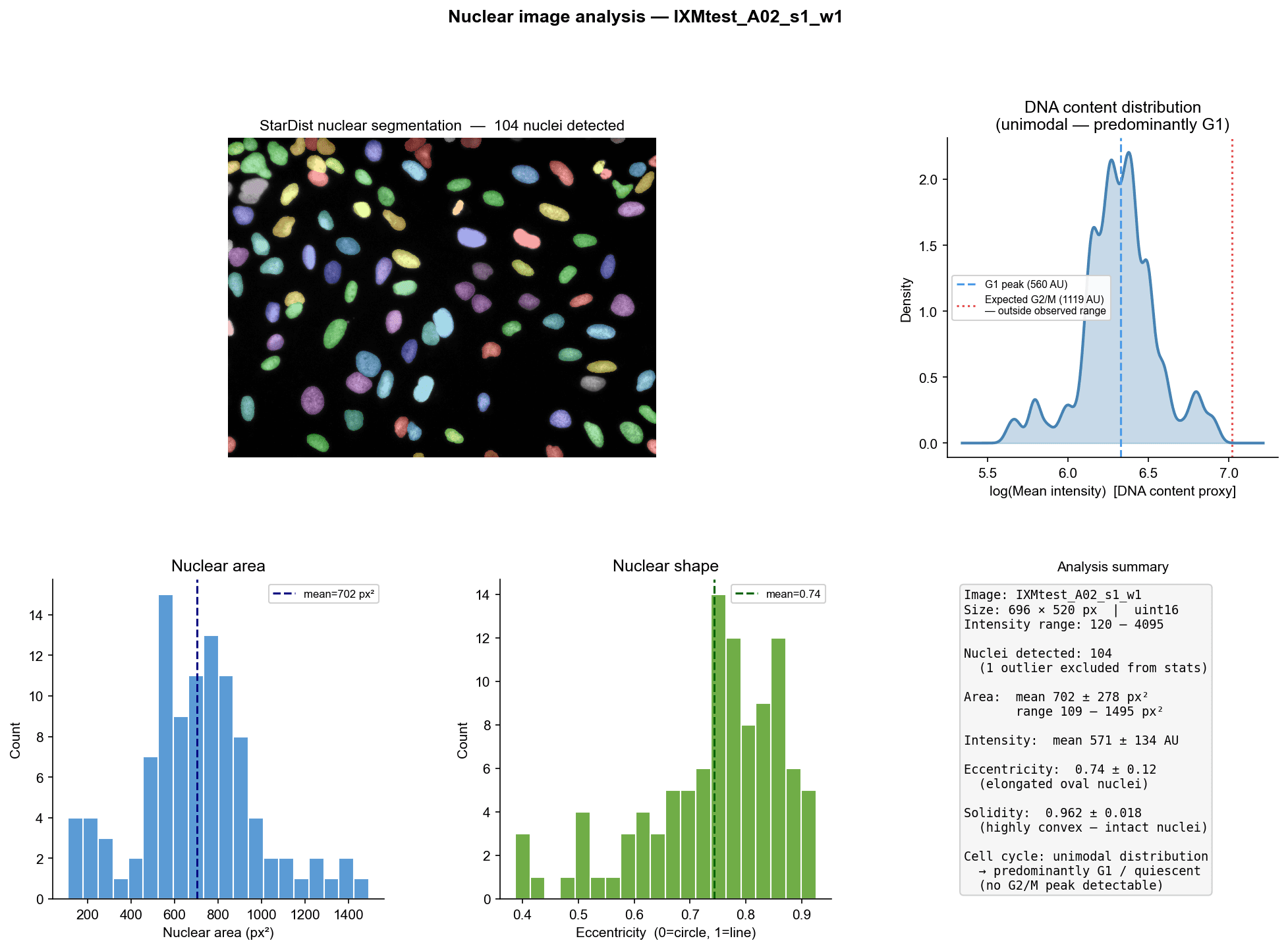
Morphometry: skimage.measure.regionprops_table — area, mean/max intensity, eccentricity, solidity, perimeter, centroid per nucleus
Texture: Haralick GLCM features (contrast, homogeneity, energy, correlation) at distance=1, four angles, 64 grey levels
Area: mean 702 ± 280 px², range 109–1,495 px²
Mean intensity: 571 ± 134 AU (population of 103, excl. outlier)
Eccentricity: mean 0.744 (elongated ovals; 0=circle, 1=line)
Solidity: mean 0.962 (highly convex — intact, well-segmented nuclei)
Clustering
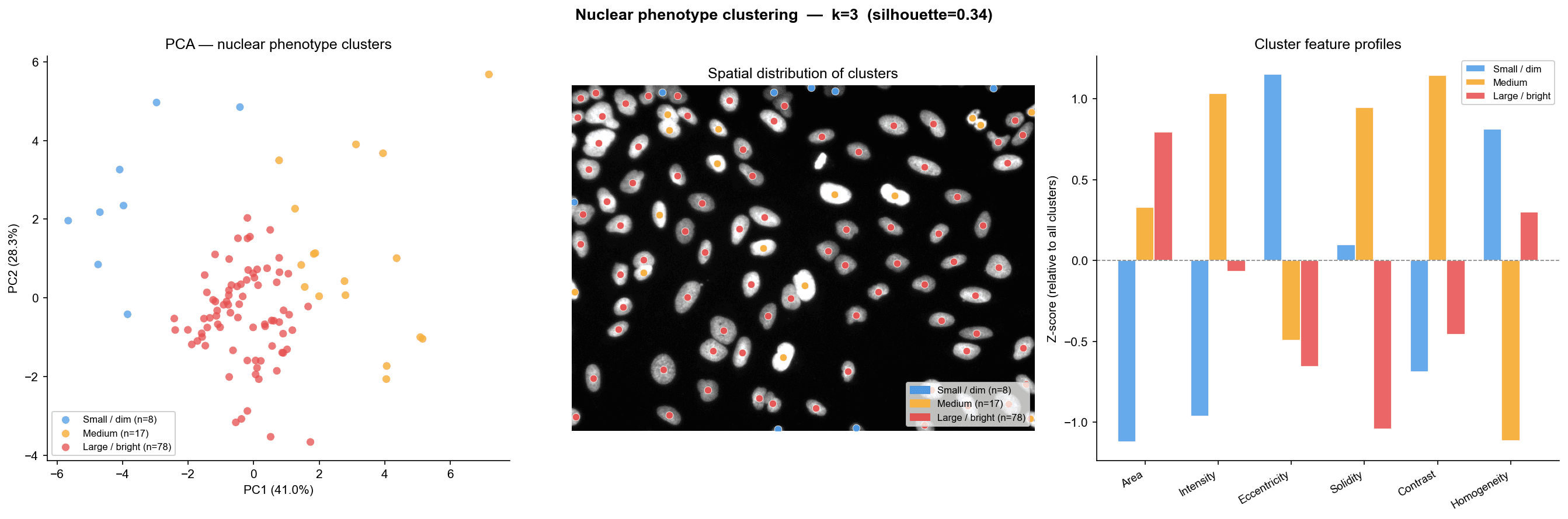
Unsupervised phenotypic clustering: KMeans (k=3, chosen by silhouette sweep k=2–6; silhouette=0.34) on 10 standardized morpho+texture features
Cluster | Label | n | Mean area | Mean intensity |
|---|---|---|---|---|
0 | Small/dim | 8 | 285 px² | 357 AU |
1 | Medium | 17 | 643 px² | 781 AU |
2 | Large/bright | 78 | 758 px² | 547 AU |
Cluster 0 corresponds entirely to edge-truncated artifacts. The PCA space (PC1+PC2 = 69.3% variance) shows clear separation between clusters
Clusters 1 and 2 represent biologically distinct nuclear states — the dominant population (Cluster 2, n=78) comprises large, bright, highly convex nuclei consistent with interphase cells in G1, while the medium cluster (Cluster 1, n=17) captures nuclei with elevated intensity (781 vs 547 AU), higher texture contrast, and lower homogeneity, segregating into the S-phase fraction
Cell cycle
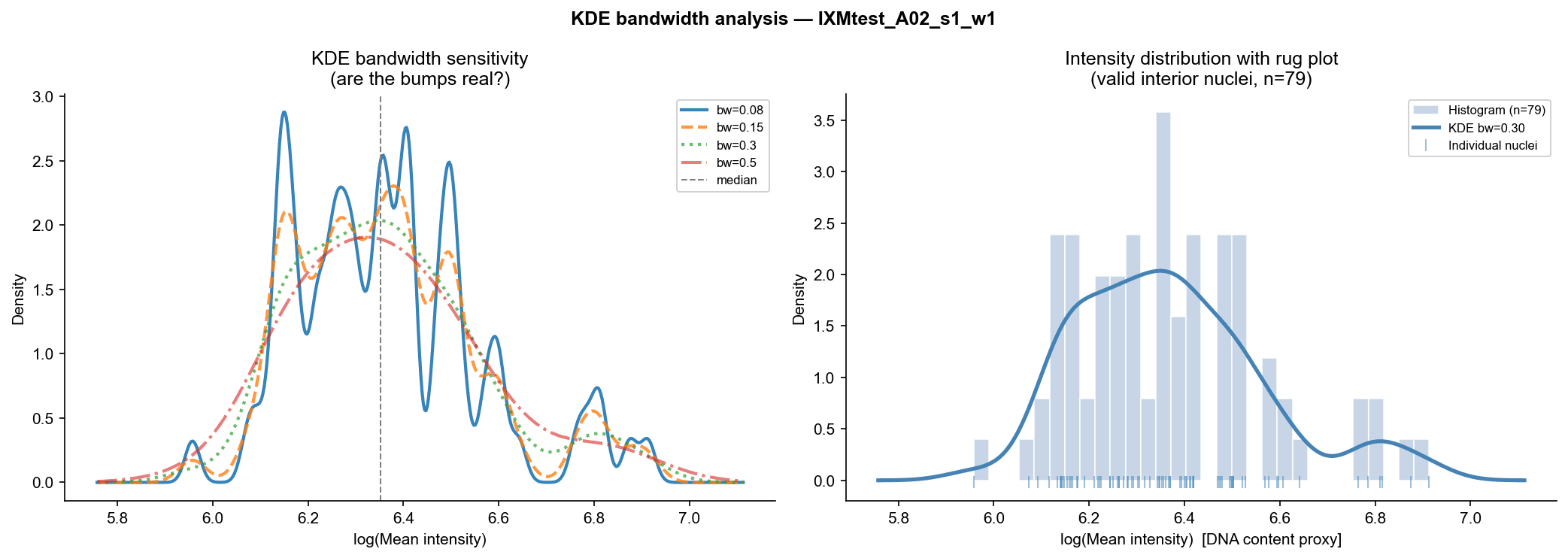
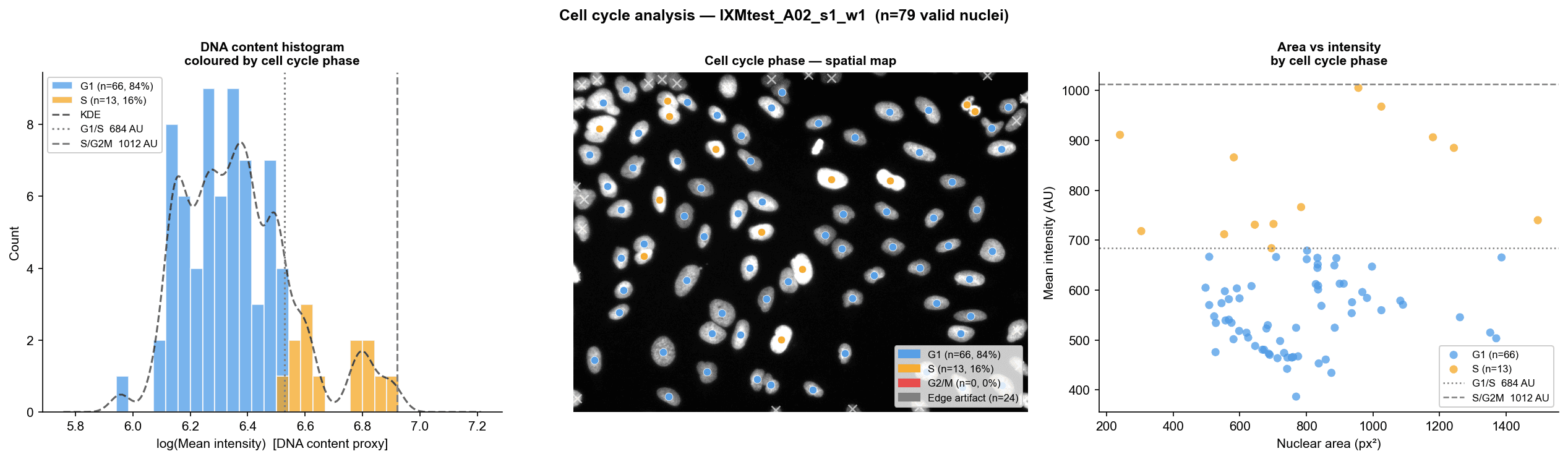
The intensity distribution is formally unimodal (Hartigan p=0.697) and the absence of any G2/M nuclei — where none reached the expected 2× G1 DNA content threshold of ~1,100 AU — is consistent with a non-cycling, quiescent, or early-passage culture
G1 baseline (dominant cluster median): 550 AU; expected G2/M at 2×G1 = 1,100 AU exceeds observed maximum (1,005 AU)
A minor S-phase fraction of 16.5% (n=12) is detectable via an intermediate intensity shoulder in the KDE at bw=0.15
Biologically-informed thresholds: G1/S = 688 AU (1.25×); S/G2M = 1,018 AU (1.85×)
G1: 67 nuclei (83.5%) | S-phase: 12 nuclei (16.5%) | G2/M: 0
G1 vs S comparison
G1 vs S-phase comparison (Mann-Whitney U, two-sided)
Feature | G1 median | S median | Fold S/G1 | p | Significance |
|---|---|---|---|---|---|
Area (px²) | 756 | 743 | 0.98 | 0.870 | ns |
Eccentricity | 0.770 | 0.755 | 0.98 | 0.811 | ns |
Solidity | 0.967 | 0.964 | 1.00 | 0.482 | ns |
Perimeter | 106 | 106 | 1.00 | 0.913 | ns |
Contrast | 2.36 | 4.90 | 2.07 | 4.5e-7 | *** |
Homogeneity | 0.753 | 0.641 | 0.85 | 2.7e-6 | *** |
Energy | 0.302 | 0.236 | 0.78 | 6.1e-5 | *** |
Correlation | 0.913 | 0.926 | 1.01 | 0.290 | ns |
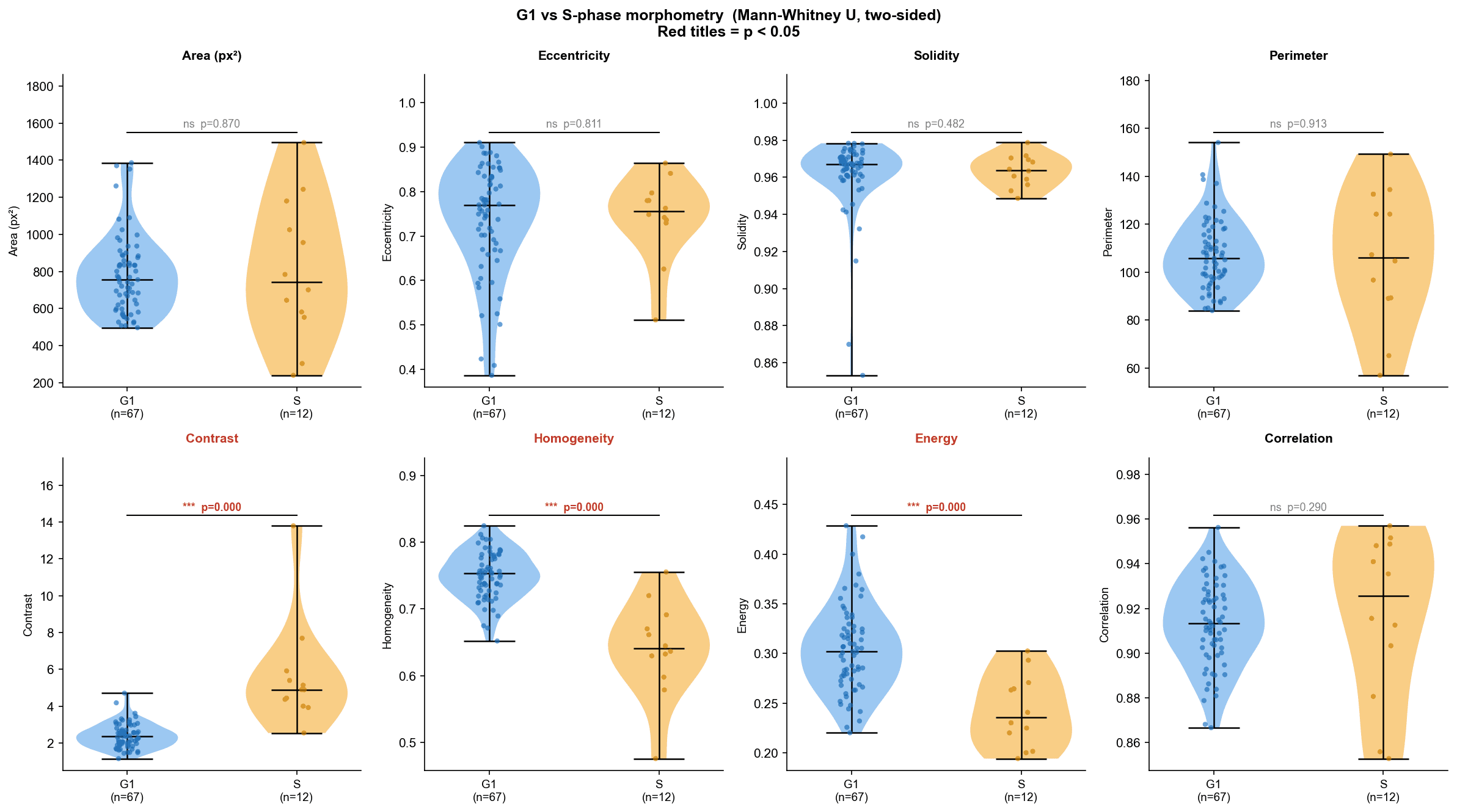
Chromatin texture as a phase discriminator: S-phase nuclei are morphometrically indistinguishable from G1 nuclei in size, shape, and perimeter (all Mann-Whitney p > 0.05), but exhibit a strong chromatin texture signature — 2.07-fold higher GLCM contrast (p=4.5e-7), lower homogeneity (fold=0.85, p=2.7e-6), and lower energy (fold=0.78, p=6.1e-5). This texture fingerprint is consistent with open, replication-fork chromatin architecture, where locally decondensed domains generate elevated pixel-to-pixel intensity variance (contrast) and disrupt the uniform, tightly packed texture of G1 heterochromatin (homogeneity and energy)
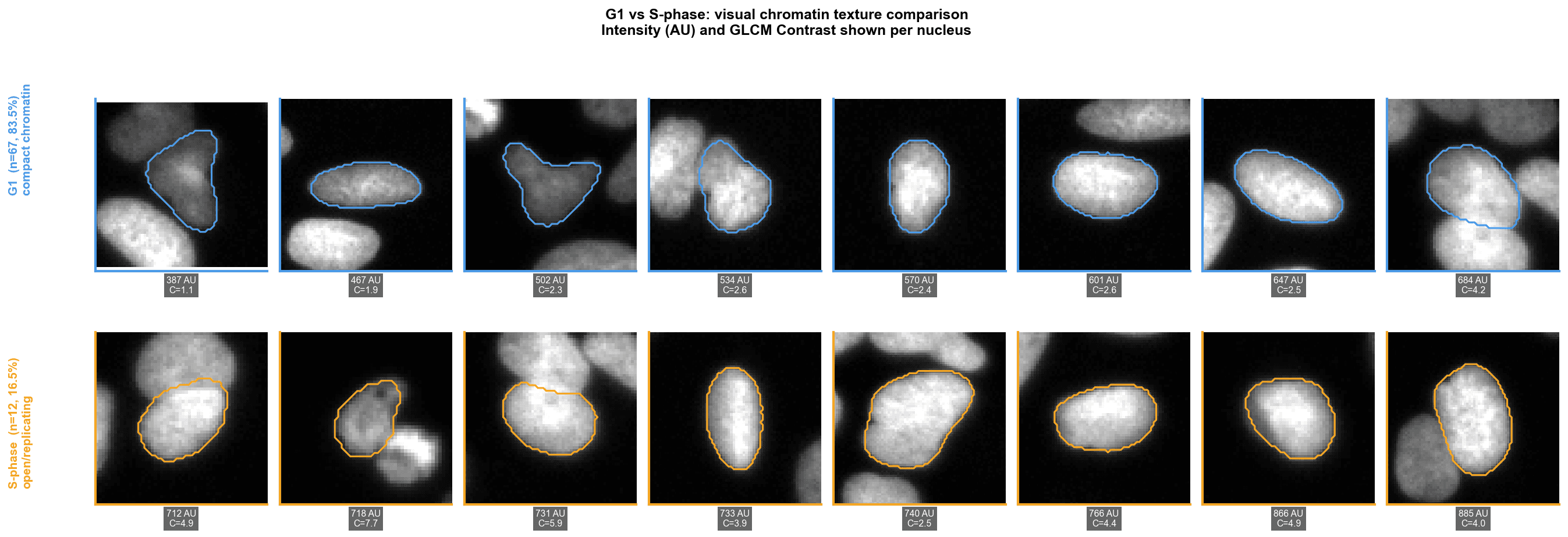
The visual crop gallery directly confirms these differences — S-phase nuclei show visibly grainier internal structure relative to the smoother G1 nuclei at comparable sizes
Standardize pipeline & Scale across multiple images
679 nuclei detected across 7 IXM fields; 549 valid nuclei retained after edge and outlier filtering
The three-panel summary figure below shows per-field nucleus counts by phase, S-phase fractions with cross-field mean, and GLCM contrast (G1 vs S) side-by-side.
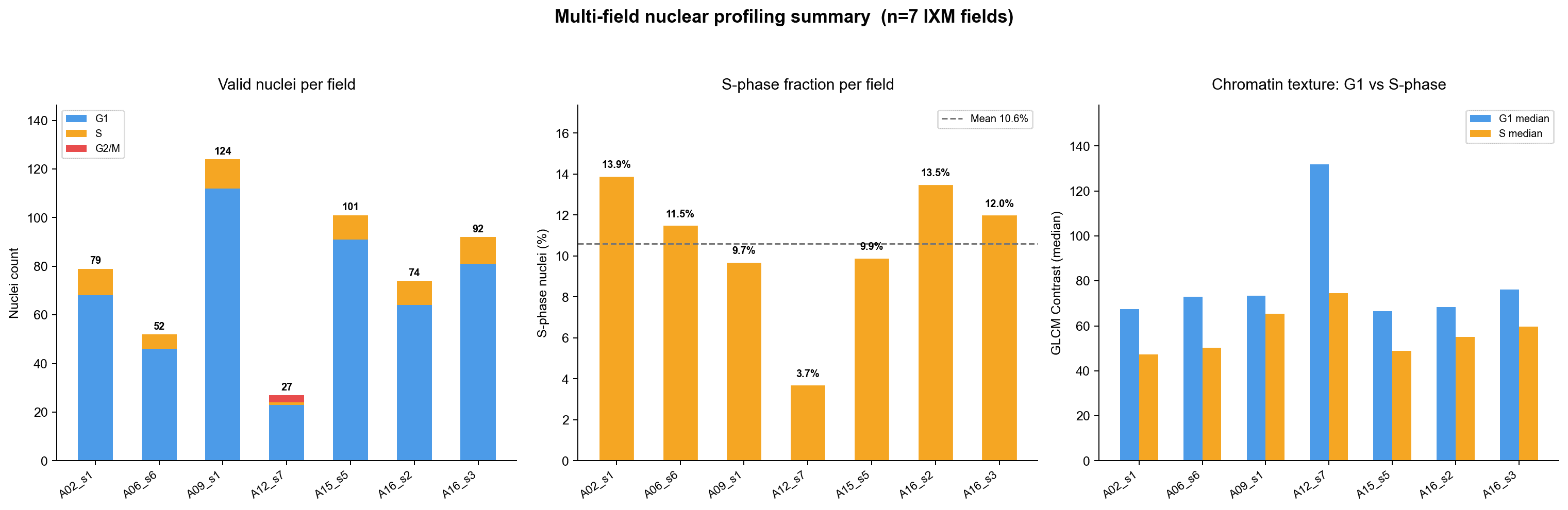
Cell counts: Valid nuclei per field range from 27 (A12_s7, a sparse field) to 124 (A09_s1). The 123 edge-artifact exclusions (18.1% of all detections) are uniform across fields, indicating consistent boundary effects expected for well-plate imaging.
S-phase fraction: Consistent across six of seven fields at a mean of 10.6% ± 3.4% SD, compatible with an asynchronous, slow-cycling population.
A12_s7 outlier: S-phase fraction drops to 3.7% (n=1) while G2/M rises to 11.1% (n=3) — the only field with detectable G2/M nuclei.
GLCM contrast: G1 baseline contrast (median 79.5 AU) exceeds S-phase contrast (57.3 AU) consistently across all 7 fields, with per-field S/G1 ratios ranging 0.56–0.89×.
Total detected | Edge artifacts | Valid nuclei | G1 (n) | G1 (%) | S (n) | S (%) | G2/M (n) | G2/M (%) | Mean area (px²) | Mean intensity (AU) | G1 baseline (AU) | Contrast G1 | Contrast S | Contrast S/G1 | ||
|---|---|---|---|---|---|---|---|---|---|---|---|---|---|---|---|---|
A02 | 1 | 104 | 24 | 79 | 68 | 86.1 | 11 | 13.9 | 0 | 0.0 | 783.5 | 594.9 | 573.8 | 67.6 | 47.2 | 0.70× |
A06 | 6 | 68 | 15 | 52 | 46 | 88.5 | 6 | 11.5 | 0 | 0.0 | 772.8 | 644.4 | 631.5 | 72.9 | 50.3 | 0.69× |
A09 | 1 | 150 | 25 | 124 | 112 | 90.3 | 12 | 9.7 | 0 | 0.0 | 688.0 | 569.3 | 564.3 | 73.4 | 65.4 | 0.89× |
A12 | 7 | 31 | 3 | 27 | 23 | 85.2 | 1 | 3.7 | 3 | 11.1 | 483.2 | 515.1 | 471.7 | 131.9 | 74.5 | 0.56× |
A15 | 5 | 126 | 24 | 101 | 91 | 90.1 | 10 | 9.9 | 0 | 0.0 | 741.5 | 601.8 | 594.0 | 66.6 | 48.8 | 0.73× |
A16 | 2 | 87 | 13 | 74 | 64 | 86.5 | 10 | 13.5 | 0 | 0.0 | 791.5 | 636.4 | 628.2 | 68.3 | 55.1 | 0.81× |
A16 | 3 | 113 | 19 | 92 | 81 | 88.0 | 11 | 12.0 | 0 | 0.0 | 716.9 | 517.4 | 501.3 | 76.2 | 59.7 | 0.78× |
TOTAL | — | 679 | 123 | 549 | 485 | 88.3 | 61 | 11.1 | 3 | 0.5 | 711.1 | 582.8 | — | 79.5 | 57.3 | 0.74× |