4.3 A few tips from the Drylab team
Get Started

Bioinformatics analysis can quickly become complex, with different datasets requiring different tools at each stage of the workflow.
Whether you're starting with raw data or already have a processed object, choosing the right analysis path makes all the difference.
A few tips from the Drylab team:
1. State the scientific goal.
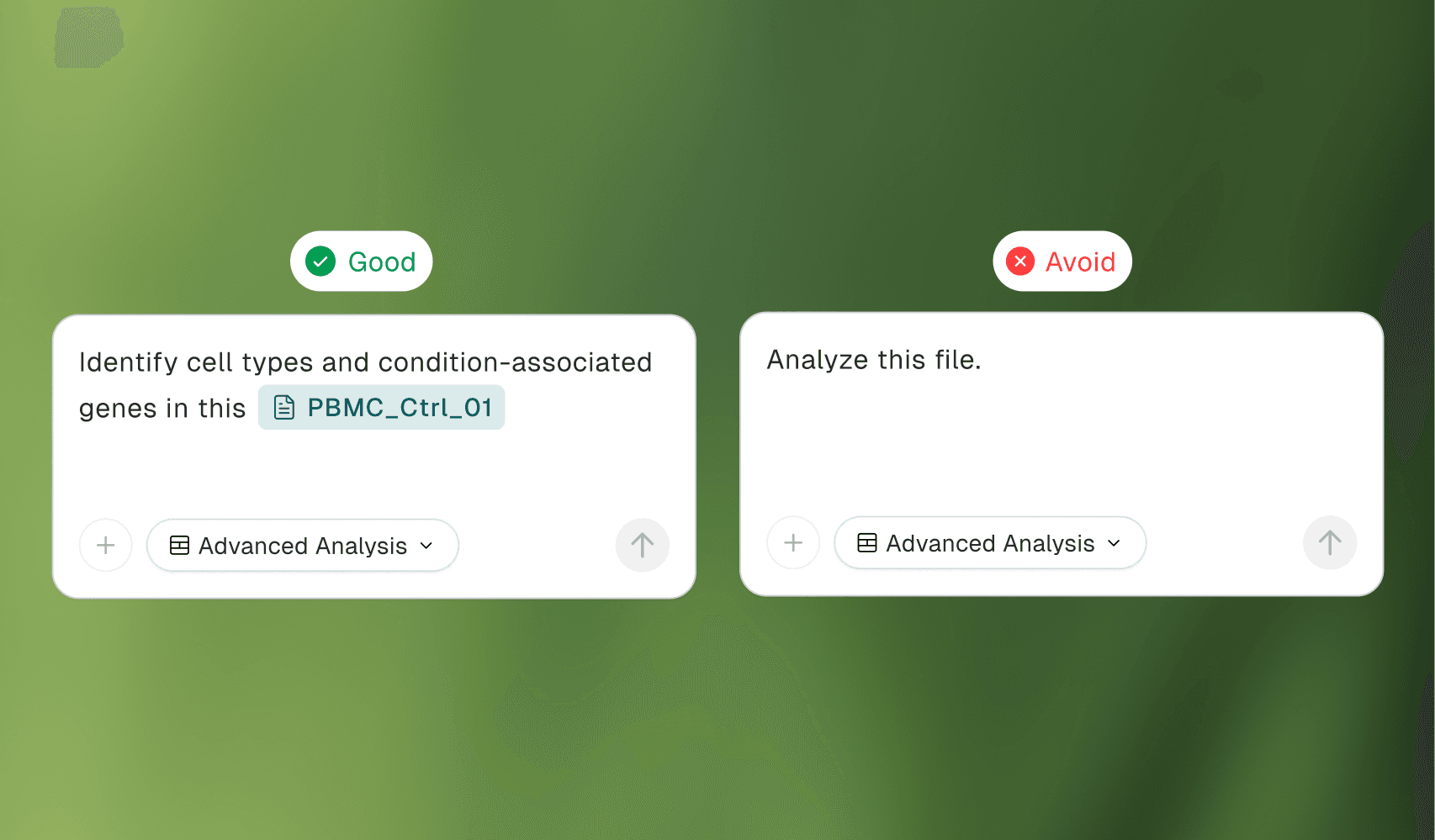
2. Provide the inputs and experimental design

• Upload or point to the data.
• Specify sample IDs, conditions, replicates, organism/genome build,
assay, and the primary comparison.
3. using "@" to call a tool .
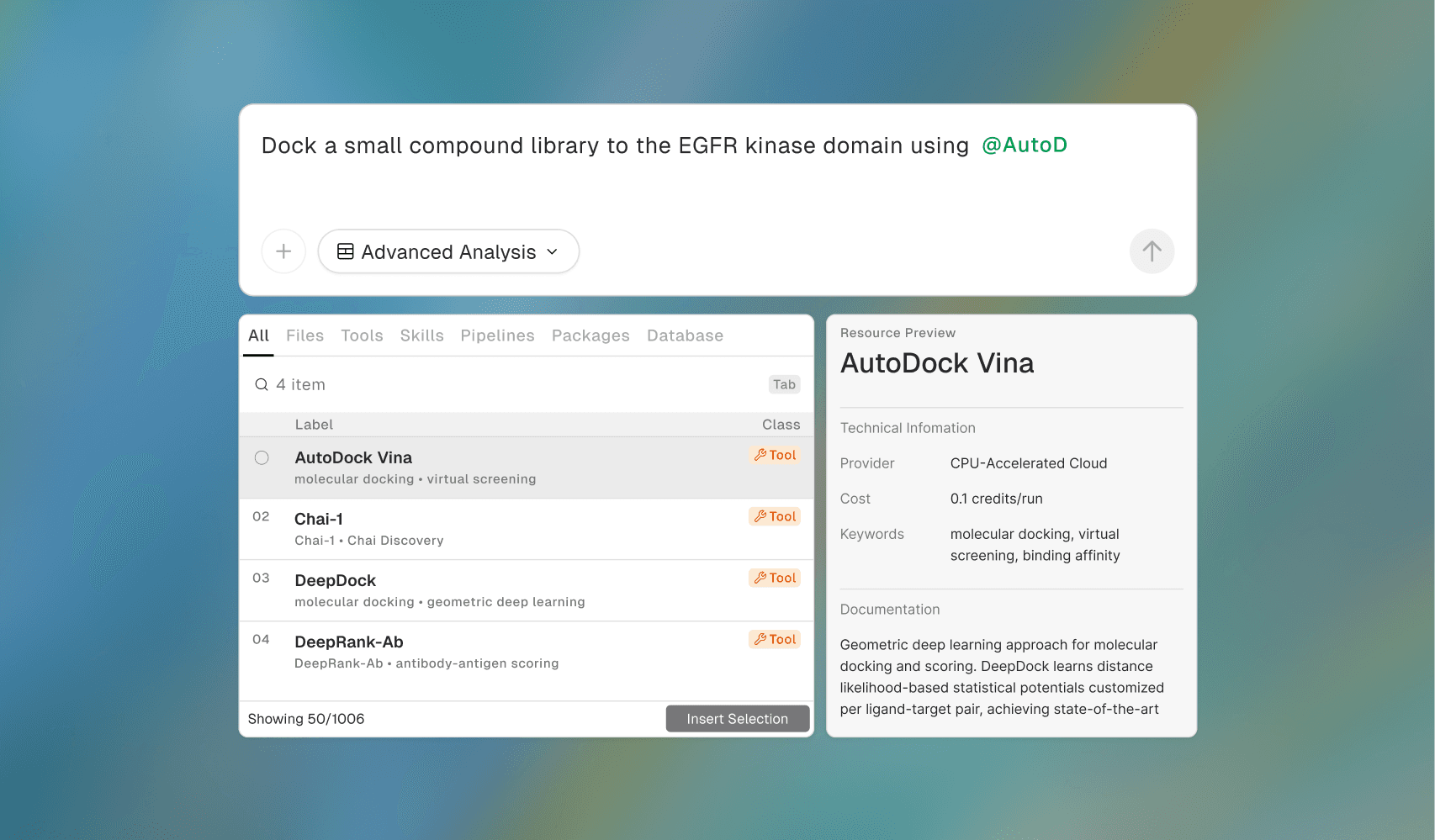
Type @ in the chat input to open a picker showing tools, datasets, workflows. Keep typing a name to filter and select exactly what you need.
This helps Drylab lock onto the right context from the start, giving you faster, more accurate output.
4. Ask for an initial inspection
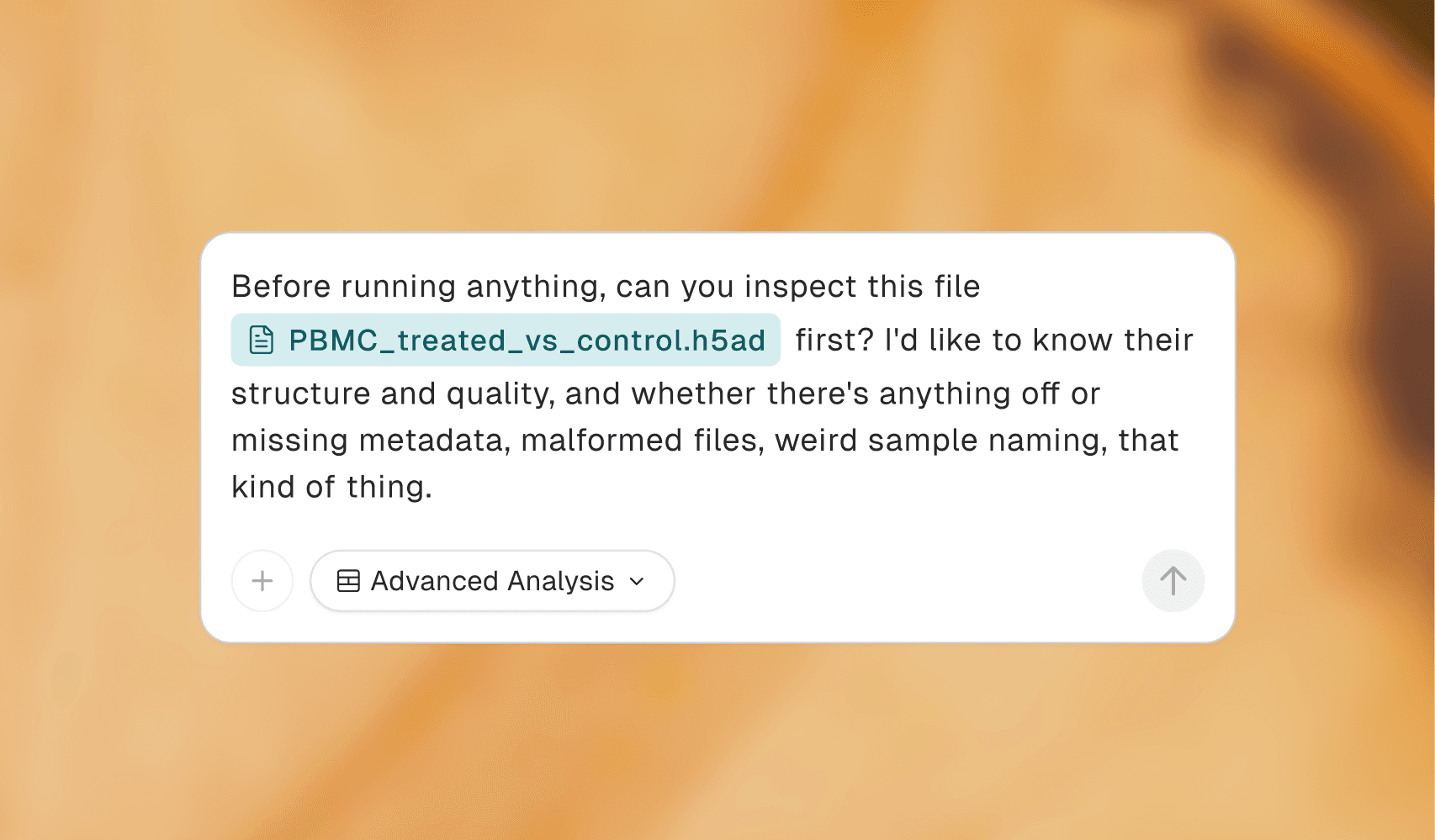
• Example: "Inspect the files, report their structure and quality, and propose an analysis plan."
• This catches missing metadata, malformed files, and design problems before expensive computation.
5. Make judgment calls explicit
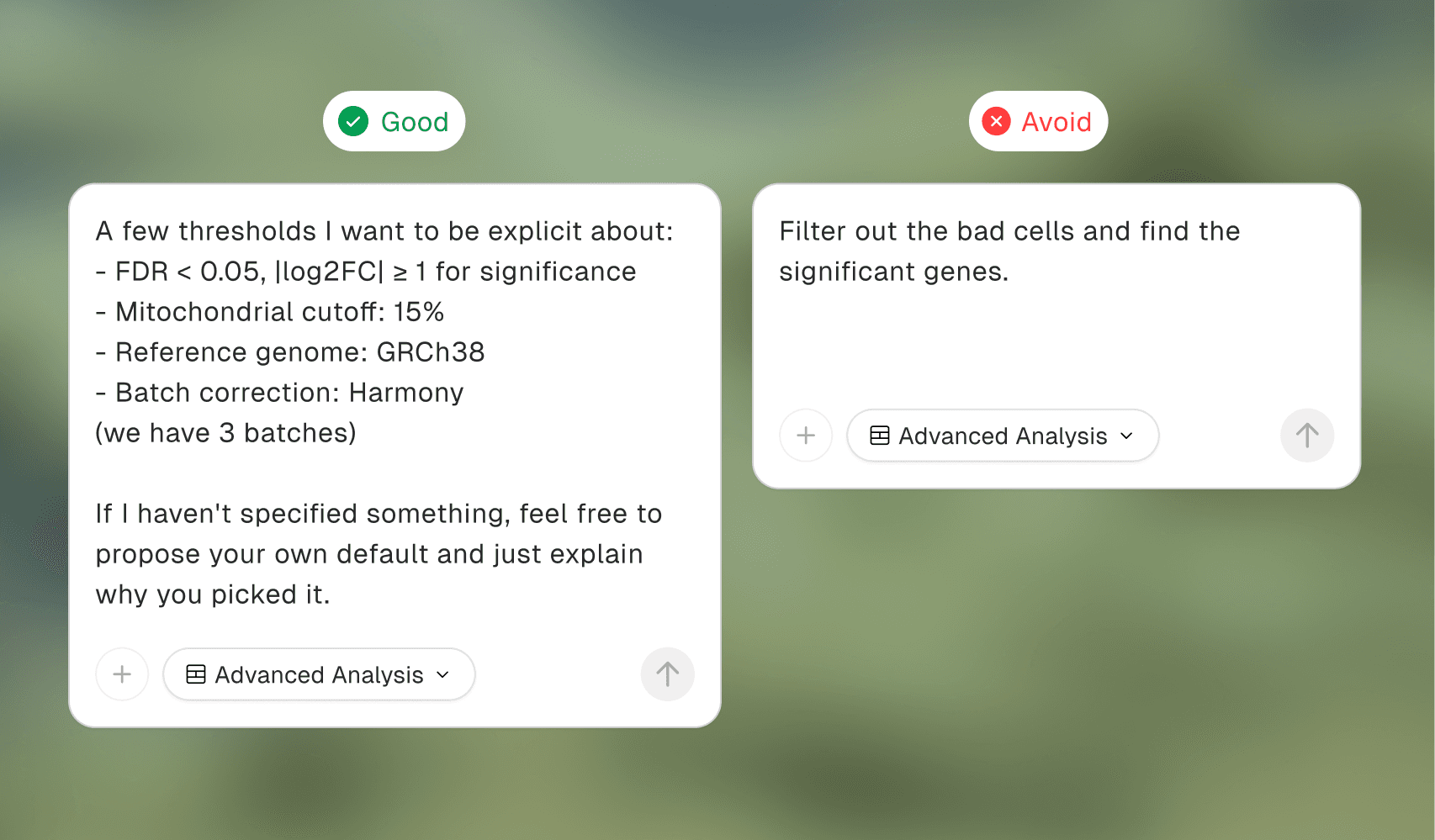
• State thresholds when they matter: e.g., FDR < 0.05, |log2FC| ≥ 1, mitochondrial cutoff, reference genome, or batch-correction strategy.
• If you do not have a preference, ask Drylab to propose defaults and explain them.
6. Approve a plan for multi-stage work
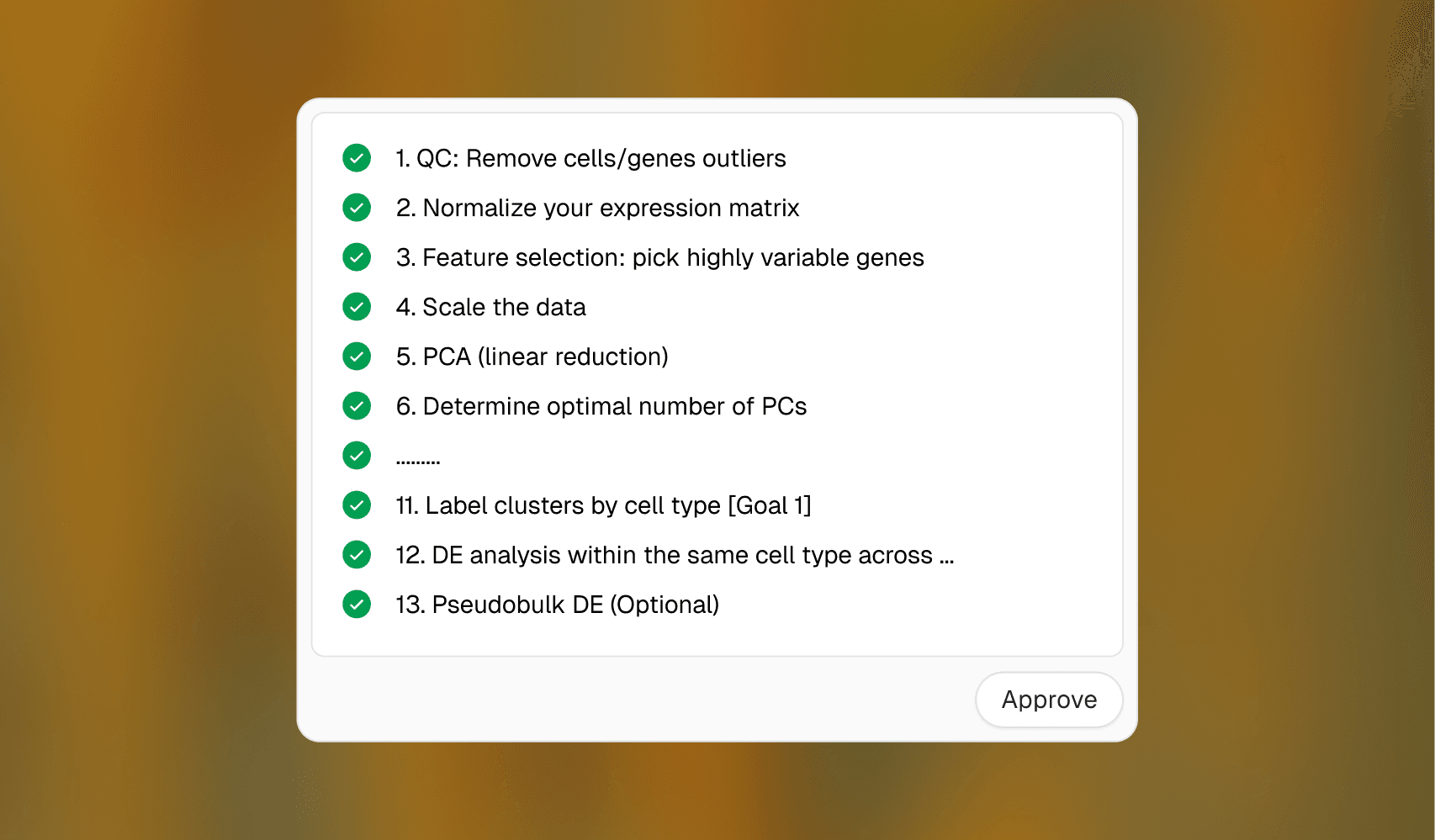
• Typical sequence:
• data validation/QC
• preprocessing and normalization
• core analysis (e.g., clustering, DE, variants)
• interpretation/enrichment
• figures, tables, and saved reproducible outputs